Dieting Myths from the ’90’s

During the 1990s, there were several dieting myths and fads that gained popularity, despite not being backed by scientific evidence or long-term effectiveness. Some of the common dieting myths of that era included:

  1. Low-fat diet is the key to weight loss: The 1990s saw a surge in low-fat diets as a means to lose weight. Many believed that cutting out fat entirely would lead to rapid weight loss and improved health. However, not all fats are unhealthy, and some fats, like monounsaturated and polyunsaturated fats, are essential for a balanced diet.
  2. The Atkins diet: The Atkins diet, introduced by Dr. Robert C. Atkins in the early 1990s, promoted a high-protein, low-carbohydrate approach to weight loss. It gained widespread popularity despite concerns about its long-term effects on heart health and other potential health risks.
  3. Grapefruit diet: The grapefruit diet claimed that eating grapefruit or drinking grapefruit juice before or during meals would help burn fat and accelerate weight loss. There was little scientific evidence to support this claim.
  4. Cabbage soup diet: This diet involved consuming large amounts of cabbage soup for a week to shed pounds quickly. While it might lead to short-term weight loss due to severe calorie restriction, it lacks essential nutrients and is not sustainable in the long run.
  5. Spot reduction: Many people believed that performing specific exercises targeting certain body parts would reduce fat in those areas. For example, doing countless sit-ups to get rid of belly fat. However, spot reduction is a myth, as fat loss occurs uniformly across the body with overall weight loss and cannot be targeted to specific areas.
  6. Detox diets: The ’90s saw the rise of detox diets that claimed to cleanse the body of toxins and aid in weight loss. These diets often involved fasting, juicing, or consuming specific detoxifying foods. However, the body has its natural detoxification system, primarily managed by the liver and kidneys, and these extreme detox diets can be harmful and ineffective for long-term weight loss.
  7. “Fat-free” and “low-fat” labeling as healthy: Many food products labeled as “fat-free” or “low-fat” were believed to be healthier options and encouraged for weight loss. However, these products often compensated for the lack of fat by adding more sugar and unhealthy additives, making them not necessarily healthier than their full-fat counterparts.

It’s important to note that the dieting landscape has evolved significantly since the 1990s, with a greater focus on evidence-based approaches to weight loss.  Eating a healthy balanced diet full of nutritious fresh food will serve the menopausal and beyond woman.

What are the 4 main health problems in Post menopausal Years?

Many of the ladies in my online groups and Pilates classes are in fact enjoying their Post-menopausal years.  Often I hear them say, ‘I don’t need to worry about all that now, I went through the change years ago’.


The truth is that post menopause, which incidentally can now be up to and beyond 30 more years, you are more at risk of chronic health issues.  Let’s not forget that the average age of death for a woman only 100 years ago was only 59 years.  Which would have meant the woman would only have been post-menopausal for a few years.


So, now, because of the changes in how the hormones are produced in your body, as well as the 21st century lifestyle issues, we need to be highly aware of the things you can do to help yourself.  And, yes, there are lots.


Heart Disease

Risk: During and after the menopause, a woman’s body gradually produces less oestrogen than it used to. This increases the risk of the coronary arteries narrowing whereas it previously protected the lining of the artery walls reducing the build-up of plaque.  This period is also associated with accelerated vascular aging (arterial stiffening and endothelial dysfunction), an antecedent to CVD.

What you can do: Exercise which will make you out of breath and sweat.  Walking up hill, cycling, aerobics, jogging.  Eat a healthy diet (see below)


Cognitive decline

Risk: Alzheimer’s and dementia one of the leading causes of death in women in the UK.  This could be to do with women living longer and being treated well for other issues.  There are many things you can do to help yourself in this regard.  Vascular dementia is about managing your blood pressure, and blood sugars.

What you can do: Daily moderate exercise, Eat and healthy energy efficient diet (see below), learn something new, keep being sociable.


Muscle mass loss

Risk: Sarcopenia is a condition by which you loose muscle strength. Causes include declines in hormones and numbers of neuromuscular junctions, increased inflammation, declines in activity, and inadequate nutrition.

What you can do:  The primary treatment for sarcopenia is exercise, specifically resistance training or strength training. These activities increase muscle strength and endurance using weights or resistance bands. Resistance training can help your neuromuscular system, hormones. Eat a healthy protein rich diet (see below)


Bone thinning

Risk: Osteoporosis weakens bones to the point that they can break easily. It is called a “silent disease” because people who develop it may not notice any changes until a bone breaks — usually a bone in the hip, spine, or wrist. You are 50% more likely to get this as oestrogen was one of the main hormones to help build your bones.

What you can do: Regular (3 times a week) strength and resistance training exercises, Eat a healthy diet (see below), stop smoking, drink less alcohol.


All of these things require you to eat a healthy diet, but what does that look like?  I’ll show you in my next Menofit Midsection Meltdown, online 7 day program.  Not only will I do easy to do 15 minute exercise sessions perfectly designed with the menopausal woman in mind, but also guide you through a healthy eating plan, which will help you to stay healthy for the rest of your life.    £34 early bird price.  PAY NOW 


Gut Health In Menopause & Beyond Years

If you asked me the one thing you could do to improve your nutrition in Menopause and beyond, I would say.

Improve your gut health.

Whilst gut health research dates back to as early as 1840, In 1998, Michael Gershon published a popular science book titled The Second Brain, in which the author elaborates a scientific discovery called revolutionary for its time: that the nerve cells in the gut have an independent, not brain-controlled influence on the functions of the intestine.  The gut brain connection was discovered.  So quite a new phenomena, and the research continues.

Menopause can have several gastrointestinal symptoms, ranging from constipation and diarrhoea to bloating, indigestion, weight loss or gain to heartburn and vomiting. Most people think about changes to the ovaries and the uterus when considering menopause.

Decreasing amounts of oestrogen and progesterone during menopause can slow down the process of food passing through the GI system. When the digestive process takes longer, more water is reabsorbed back into the bloodstream, which can lead to the constipation, increased gas and bloating

Another key finding is that menopause changes the community of bacteria living in the gut, which is called the microbiome. There is a link between certain gut bacteria and better memory.

Probiotics may help ease menopause symptoms and regulate body weight, but their effectiveness remains controversial. More research is needed to explore and support the health benefits associated with probiotic use during the various stages of menopause.

In the meantime the foods I am suggesting you eat regularly here can also help with the following symptoms of ageing:

Skin elasticity

Improves sleep

Improves joint pains

Improves memory

Improves bloating

Improves weight loss


So what should you be eating on a gut healthy diet?

Yogurt

Kefir

Miso

Sauerkraut

Kimchi

Almonds

Kombucha

Peas/beans/lentils

Brussel sprouts

Bananas

Blue cheese

Garlic

Ginger

Some of those foods you probably won’t even recognize their names or even know what they are.  Here is a video of me going around the supermarket finding these foods to help you to get them into your life.

Gut health is the future key to optimum health for the meno and beyond woman.

If you would like help to build these foods into your daily/weekly menu come and join me online for the next 7 day Menofit Midsection Meltdown on 12th June 2023.  CLICK HERE FOR EARLY BIRD OFFER

Does drinking water help with the menopause?

During menopause, dryness is often an issue. This is likely caused by the decrease in oestrogen levels. Drinking  water can help with these symptoms. Drinking water can also reduce the bloating that can occur with hormonal changes.

The common symptoms of the menopause – hot flushes and night sweats – can lead to dehydration to some extent. If you’re regularly getting sweaty through exercise, the combination of training and the menopause increases the risk of you becoming dehydrated.
How much water does a menopausal woman need to drink? You need at least 1.5 – 2 litres of plain water a day, over and above other drinks such as tea and coffee. It needs to be plain water to get the best benefit from it.
Sorry to say that drinking alcohol increases the risk of disturbed sleep, according to research . Red wine is also seen as one of the most common triggers of hot flashes. One survey found that women who drank alcohol daily were much more likely to report hot flashes and night sweats.

Signs that you’re not drinking enough water

So, let’s take a look at some of the signs to look out for that can indicate that you are not drinking enough water.

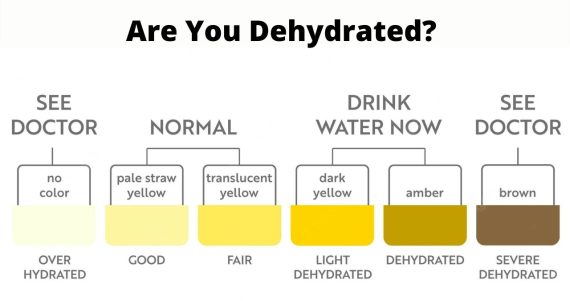
1. Your urine is dark and smelly

If your urine looks dark, if it starts to smell as well, that’s the number one signal that your body is telling you that it’s dehydrated. Healthy urine should be very, very pale and should have little or no odour at all.

2. You’re needing to go to the toilet more

It’s one of these weird things. When you drink less, you may end up going to the toilet more. But why? Well, as you get more and more dehydrated, your dark, smelly urine can become very concentrated, which irritates your bladder. It can get to the point where your bladder can become quite raw and give you symptoms like cystitis without any infection present.

When that happens, this really strong urine will just keep irritating your bladder, you will very often get a real urge to go to the toilet very quickly, you will go, and you’ll only pass a little bit of urine.

This is a standard scenario during the night. Very often, a lot of women have to get up two or three times during the night to go to the toilet. And when they go, they pass very little urine. It can sometimes be a little bit stingy. This is usually just caused by being dehydrated during the night.

3. You’re getting lots of hot flushes and night sweats

Again, as I mentioned above, this is a bit of a vicious cycle! Hot flushes and night sweats can dehydrate you, but being dehydrated will put more pressure on your nervous system, which will also trigger more hot flushes and night sweats.

4. You’re feeling tired and lethargic

Tiredness, fatigue, and feeling lethargic are classic signs of dehydration! If you’re dehydrated, your body just won’t want to move.

5. You’re struggling to concentrate and experiencing brain fog

This often goes hand-in-hand with feeling tired and lethargic. Brain fog and loss of concentration at the same time every day is another classic sign of dehydration, as well as a sign of low blood sugar level.

Your brain is full of water and is like a sponge. It needs lots of water. It’s been shown that if you get dehydrated, your brain shrinks in volume, which impacts how it functions. (1)

Even mild dehydration can affect the proper functioning of your brain and make menopausal brain fog even worse.

6. You’re getting headaches

If your brain is physically shrinking due to dehydration, as well as impacting brain function, you can also experience dehydration headaches, which can be similar to tension and thumping headaches.

7. You’re getting heart palpitations

Palpitations, again, can be due to dehydration. So, if you are getting palpitations at the same time every day, which often happens in this kind of situation, then, again, it just means that you’ve probably gone too long without that drink of water.

8. You feel thirsty and have a dry mouth

This is really common first thing in the morning. A lot of women will tell me that they feel as if their tongue is stuck to the roof of their mouth. And, again, this is often caused by becoming dehydrated during the night, especially if you have night sweats.

9. Your constipated

Your digestive tract needs lots of water to process and eliminate all the food that you’re eating. And if you’re dehydrated, everything just slows down and literally just sticks.

10. You’re feeling achy and sore

Joint pain and muscle cramps are both common symptoms of dehydration. Another great signal of dehydration is low back pain. If you’re getting a lot of back pain on both sides of the spine regularly, that’s very often your kidneys just complaining that they are feeling the dehydration as well.

11. You’re feeling low and irritable

Dehydration can greatly impact your mood, something that is already impacted during menopause. It can make you feel low and sad or irritable and angry. So, if you find you’re getting a low mood or irritable, sometimes, a glass of water can fix it.

12. You’re feeling hungry and get sugar cravings

They do say that it can be difficult to distinguish between thirst and hunger. So sometimes, if you are starting to feel hungry, if you’re getting sugar cravings, then it’s a sign that you are dehydrated, and your body is needing water and not food.

Back to basics Weight Loss – Snacking

It all so confusing these days.  There’s so much information out there, calorie counting, low fat, fasting, high protein…. where should you start?

As a 50 woman myself, I feel your pain.  So, lets take some time to get back to basics and learn about the foundations of nutrition and habit change.

Read more

Ten Miniature Habits To Help Reduce Drinking At Home

Alcohol is often the spark to ignite laughter between friends and relaxation after long days, but it can have a murkier side.

As one of the world’s most common psychoactive substances, alcohol is classified as a depressant, slowing the central nervous system, decreasing motor coordination, reaction time, and cognitive performance, and influencing mood.

Regular or heavy consumption can disrupt sleep patterns, affect judgment, alter behavior, cause depression, and impact your heart health and immune system.   Particularly in the menopausal woman.

Regardless of how much you consume, decreasing your intake may be a smart option. Whether you want to cut back because one drink every few nights has turned into several every night, or maybe you want to feel better overall, whatever the reasons, the health benefits can be immediate: lower risk of cancer and strokes, more energy, better sleep, clearer skin, and weight loss.

To help you succeed, I’ve created ten miniature habits that easily fit into your routine.

Each habit consists of a Trigger (an everyday routine that triggers drinking) and an Action (the new practice that will replace frequent drinking or stop altogether.)

After you complete a new habit give yourself a “pat on the back”—Praise—for nailing your new practice.  Whatever makes you smile because praising yourself activates feel-good vibes that make your new habit easy.

Pick one or two miniature habits from the checklist each week and take on the challenge to complete the habit daily for at least five days.

Not all of them will suit your lifestyle, but once you’ve tried some, you’ll be able to customize others to meet your routine. Are you ready for the challenge?

  1. After I finish one glass of wine, I will immediately put dish soap into the glass.
  2. After I get home from grocery shopping, I will put one beer in the fridge and the rest in the cupboard.
  3. After I start making dinner, I will pour myself a non-alcoholic beverage.
  4. After I finish dinner, I will immediately brush my teeth to stop drinking in the evening.
  5. After I arrive home from work, I will fill my water glass.
  6. After I see it is past eight p.m., I will boil the kettle.
  7. After I say goodnight to my children, I will make a herbal tea.
  8. When I think about pouring a glass of wine, I will do three push-ups.
  9. After a friend asks if I want to catch up for a mid-week drink, I will smile and say, “thank you, but not tonight.”
  10. When I feel discouraged, I will reread the intro to this challenge.

Good luck and let me know how you get on.

10 Ways To Include Flax Seeds In Your Food

Flax seeds are tiny oil seeds that originated in the Middle East thousands of years ago. Today they have gained popularity as a health food due to their high content of unique plant compounds, heart-healthy omega-3 fats, and fiber, all of which link to numerous benefits.

With their mild, nutty flavour and crispy, crunchy consistency, flax seeds are an all-around ingredient that can enhance the taste and texture of almost any recipe.

Flax seeds have been linked to slight increases in oestrogen, improved hormone metabolism, fewer hot flashes, reduced vaginal dryness, and better overall quality of life in menopausal and postmenopausal women

Let’s explore the many ways to savour the health attributes of this potent seed.

  1. Swirl into SmoothiesPut a couple of tablespoons of flax seeds in your blender and pulse for 10 seconds (Or you can buy them ground.)

    Now you are ready to boost your healthy fat intake by blending a tablespoon or two into your favorite fruit smoothie.

    Use, for example, ½ banana, 1 cup of berries, 1 cup of almond milk, and two tablespoons of flax seeds.

  2.  Add to Granola Two tablespoons of flax seeds contain 4 grams of fiber. So, boost your fiber intake by mixing two to four tablespoons of flax seeds into your granola.Try this homemade granola instead of the store-bought: 110 grams of almonds, four tablespoons of peanut butter, one tablespoon of cinnamon, 150 grams of oats, two tablespoons of maple syrup, and three tablespoons of flax seeds.

    Bake everything for 12 – 15 minutes.

  3. Use instead of oils when bakingTry replacing oils for ground flax seeds in baking goods in a ratio of 3 parts flax seeds to 1 part oil, which means, instead of 1 tablespoon of oil, use three tablespoons of ground flax seeds.
  4. Swap out eggs for flaxseedFlax seeds create a viscous liquid that mimics an egg. So, if you are out of eggs, mix one tablespoon of ground flax seeds and two tablespoons of water.

    Let the mixture rest while you gather the rest of your recipe ingredients.

  5. Substitute for MeatAdding flax seeds to a vegetarian burger recipe is a great way to get a meaty flavor. The flax seeds will help bind the ingredients together.

    Use ¼ cup of ground flax seeds instead of breadcrumbs.

    And a bonus here is that flax seeds are gluten-free!

  6. Salad DressingSwirl ground flax seeds into your favorite salad dressing to make sure you get tons of good minerals like phosphorous, magnesium, manganese, zinc, selenium, copper, and iron.


    Try this delicious salad dressing recipe:

    • One cup of water
    • ½ cup of lemon juice
    • Two cloves of garlic
    • One teaspoon of salt
    • One teaspoon of granulated onion
    • ¼ cup of fresh basil
    • ¼ cup of finely ground flax seeds

    Mix everything except flax seeds in a blender until smooth. Then add flax seeds and blend thoroughly

  7. Make a healthier nut spreadFlax seeds have enough healthy fats to create a creamy and buttery spread. The taste of flax seeds butter on its own may not be as appealing to you at first.

    So, the first time you try, add ground flax seeds to your favorite peanut butter or other nut spread

  8. Boost your Soup RecipesSwap out part of the butter or cream for two tablespoons of ground flax seeds in a creamy soup. That will create a velvety and nutty finish in soups. Add a dash of whole flax seeds on top for a crunchy finisher for the finishing touch.
  9. Use in PancakesMake delicious flax seed, gluten-free, vegan, refined sugar-free pancakes

    Use ¼ cup of flax seeds, one ¼ cup of gluten-free flour, two teaspoons of baking powder, 1 cup of almond milk, one tablespoon of apple cider vinegar, and two tablespoons of maple syrup.

    Serve your pancakes with your favorite fruits.

  10. Sprinkle on TopThe easiest way to add flax seeds to your daily diet is to sprinkle them on any yogurt or oatmeal, giving you a healthy start to your morning.

Including flax seeds in your diet will give you a tasty experience and provide your body with many health benefits.

The high fiber content in flax seeds may relieve constipation and positively affect your gut microbiome.

Research suggests that flax seeds may be helpful for some people diagnosed with heart and blood vessel diseases. Apart from this, flax seeds may also help blood sugar in some people with type-2 diabetes.

Studies also show that due to the nutrient lignans found in flax seeds, eating these seeds may help decrease cancer growth and lower the risk of several types of cancer.

So, go ahead and give these nutritious seeds a try.